Clipping Path Service for Ecommerce: When to Outsource Background Removal and When AI Makes It Unnecessary
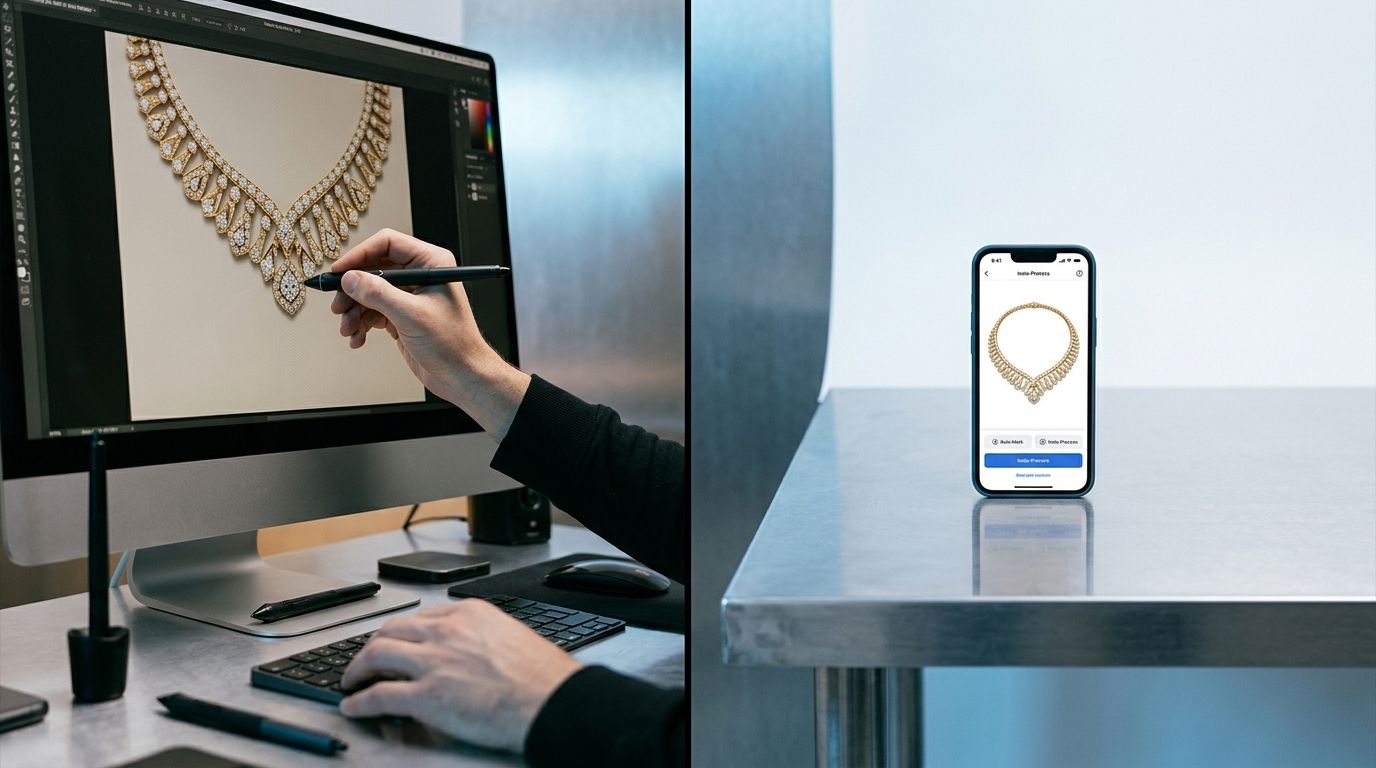
If you are still sending batches of product photos to an outsourced clipping path service for ecommerce, you are bleeding time. The core question is whether AI tools can deliver the exact same background removal quality at a lower cost. For catalog volume, the answer is an absolute yes. Manual clipping paths made sense when algorithms struggled with sharp edges. Today, automated tools deliver pixel-perfect transparency instantly.
Definition
A clipping path service is a manual photo editing process where a human operator traces the precise outline of a product using a digital pen tool. Ecommerce businesses use this technique to isolate items from their original environments and create product images with pure white or transparent backgrounds.
Paying a human to manually trace the outline of a coffee cup in 2026 is a failure of operational efficiency. The invoice from an offshore editing firm is never just the fifty cents per image. It is the twenty-four hours you wait for the return delivery. It is the Dropbox folders you have to organize. It is the back-and-forth revision cycles when a retoucher accidentally cuts off the strap of a handbag.
When you rely on an external background removal service for ecommerce, your launch schedule is entirely at their mercy. You finish a shoot on Tuesday. You upload the raw files on Wednesday. You get them back on Thursday. You request revisions on Friday. The weekend hits. You finally have usable images by Monday. That five-day lag exists purely because of an outdated workflow.
(Worth noting: if you are shooting highly intricate jewelry like layered fine chain necklaces over a textured background, manual clipping paths drawn by a human still have an edge. AI can sometimes clip out the negative space inside tiny links aggressively.)
What exactly is a clipping path service for ecommerce?
A clipping path service is an operation where graphic designers use the Pen tool in Photoshop to draw a vector line around the perimeter of a product. This isolates the item from the background it was shot on. Once the path is closed, the background is deleted. You are left with a transparent PNG or a product sitting on a pure white canvas.
For years, this was the only viable way to process catalog imagery. Magic wand tools and early automated selectors left jagged edges. They choked on fuzzy materials like fleece or complex shapes like bicycles. To get clean lines, ecommerce brands outsourced this labor to massive post-production houses, typically located in regions with lower labor costs.
The promise was simple. You send us a hundred raw photos. We charge you forty cents a photo. You get perfect white backgrounds tomorrow. For a decade, every major retailer ran on this exact system. It became a permanent line item in the marketing budget.
The hidden friction of cheap post-production
The problem with outsourcing product photos is that the financial cost is deceptive. The actual cost of a clipping path product photography workflow hides in the management overhead. Someone on your team has to prepare the files. Someone has to write the brief explaining exactly where the shadow should fall. Someone has to download the massive zip files, review every single image, and circle the mistakes.
If a clipping path vendor cuts a shadow too tight, the product looks like it is floating in space. If they miss the interior of a mug handle, the original background peeks through. Every mistake requires an email, another file transfer, and another delay. When you are launching fifty new SKUs and waiting on a vendor to fix background removals, your entire go-to-market motion stalls. The true cost is the bottleneck.
Clipping path vs AI background removal
The conversation around clipping path vs automated background removal changed completely over the last twenty-four months. Early AI tools were clumsy. They blurred the edges of products and routinely deleted important details. That is no longer true. Modern algorithms evaluate pixels with terrifying precision. They understand depth, lighting, and material texture.
Understanding how AI product photography works changes how you view post-production. Instead of relying on a human to manually click around an object thousands of times, the algorithm instantly isolates the subject based on billions of training parameters. It knows what a shoe looks like. It knows what a shadow should do. It completes the task in seconds.
When to keep paying for manual paths
AI tools still occasionally misinterpret highly reflective surfaces that mirror the background, requiring a quick manual touch-up. There are absolutely times when a human editor is still required. If you sell translucent glassware photographed against a heavily patterned background, algorithms might struggle to maintain the exact optical distortion of the glass.
The same applies to complex netting, highly intricate lace, or products shot in incredibly low light where the edge of the item physically blends into the background shadow. If you sell fine diamond jewelry, pay the five dollars per image for a master retoucher. The margin on a diamond ring justifies the manual labor. The margin on a water bottle does not.
When AI makes the entire process obsolete
For ninety percent of ecommerce brands, paying for a clipping path is a habit rather than a necessity. If you sell apparel, beauty products, packaged food, or electronics, AI handles the extraction flawlessly. But the real shift is not just faster background removal. The real shift is eliminating the need for a transparent background entirely.
You do not actually want a transparent PNG. You want a final image that sells your product. By using editing product photos without Photoshop techniques through platforms like CherryShot AI, you skip the intermediate steps. You upload the raw photo. The AI isolates the product and immediately places it into a photorealistic lifestyle scene. It generates the environment around the product. You go from a rough phone shot to a campaign-ready asset in minutes. No clipping path service required.
Evaluating Your Options
| Method | Turnaround | Cost Per Image | Best For |
|---|---|---|---|
| Manual Clipping Service | 24 to 48 hours | $0.50 to $5.00 | Complex fine jewelry, extreme transparency |
| Basic AI Background Tools | Instant | Fractions of a cent | Standard catalog items on white backgrounds |
| CherryShot AI Generation | Minutes | Starts at $10/50 images | Replacing expensive lifestyle shoots entirely |
How much does clipping path service cost per image?
Most agencies charge on a sliding scale based on complexity. A simple box might cost thirty cents. A shoe with intricate laces might cost a dollar. A bicycle with spokes could run three dollars. When comparing AI photography cost vs. traditional shoots, you have to factor in these post-production expenses. A catalog with five hundred SKUs, shot from three angles each, requires fifteen hundred clipping paths. Even at a blended rate of fifty cents, you are paying seven hundred and fifty dollars just to delete the background.
You are paying that fee every single time you launch a new collection. You are paying it for every color variant. You are paying it for every angle. The cost scales linearly with your output. AI disrupts this model entirely. When you use an AI tool, the marginal cost of removing a background approaches zero.
Calculating the true turnaround time
The most damaging cost of a clipping path service is not financial. It is temporal. Every time you outsource photo editing for ecommerce, you introduce a lag into your workflow. If your marketing team needs an asset for an email campaign on Thursday, you cannot shoot it on Wednesday afternoon. You have to account for the vendor.
When you bring that capability in-house using AI, the bottleneck disappears. You upload the file. You get the result immediately. You can test different background colors. You can generate a lifestyle scene. You can immediately publish the product. That speed advantage matters far more than saving forty cents an image.
Frequently Asked Questions
What is a clipping path service?
A clipping path service is a manual photo editing process where operators use a digital pen tool to trace the precise outline of a product. This vector path isolates the item from its original setting so the background can be safely removed or replaced. Online retailers rely on this technique to create consistent, pure white background images across their entire digital catalog.
How much does clipping path service cost per image?
Manual clipping paths typically cost between thirty cents for basic geometric shapes and five dollars for complex items like fine jewelry. The pricing scales directly with the intricacy of the product edges and the time required for a human operator to trace them. Processing thousands of product photos per season turns this seemingly small per-image fee into a substantial recurring operational expense.
Can AI replace clipping path services for ecommerce?
Artificial intelligence completely replaces manual clipping paths for the vast majority of standard consumer goods. Modern background removal algorithms accurately interpret complex edges, soft shadows, and difficult lighting conditions without requiring any human intervention or manual tracing. Processing large batches of catalog images through these automated systems takes a few seconds instead of the standard overnight turnaround required by traditional offshore editing vendors.
When should I use manual clipping path vs AI background removal?
Manual clipping paths are required when photographing highly intricate items like layered fine chain necklaces on textured backgrounds or sheer lace garments where the backdrop bleeds through. These specific scenarios demand human judgment to separate the product from the negative space accurately. For almost everything else in standard apparel, cosmetics, and electronics, automated tools deliver identical pixel accuracy at a fraction of the total cost.
What is the best alternative to clipping path services?
Full-suite automated product photography platforms offer the most effective alternative to manual image editing services. These systems isolate the subject and immediately generate a photorealistic lifestyle scene or high-end studio environment directly around the item in one step. Creating the final campaign asset directly from the raw file eliminates the need for separate background removal steps and external retouching vendors completely.
Key Takeaways
- Manual clipping path services add unnecessary 24-to-48-hour delays to your launch cycles.
- AI background removal perfectly handles 95% of standard ecommerce products instantly.
- Human editors are only strictly necessary for complex jewelry or translucent materials over noisy backgrounds.
- Advanced AI tools completely bypass clipping paths by generating the background and the lifestyle environment simultaneously.
Stop paying a per-image fee just to delete pixels. The era of managing massive zip folders full of transparent PNGs is over. Upload your raw product image to CherryShot AI, select a visual mode, and get campaign-ready photography without ever dealing with a clipping path vendor again.
Calculate your post-production bottleneck today
Review your last major product launch and count the days spent waiting for external image mask revisions. If you sell standard consumer goods, you can transition your entire background removal pipeline to instant automated processing. Upload a sample catalog image right now to verify the edge detection accuracy.
Try CherryShot AI